bio
Jessica Swank is an interdisciplinary artist, currently based in Greenville, SC. Her work has been exhibited both nationally and internationally, at galleries such as Millepiani in Rome, Italy, Plexus Projects in Brooklyn, NY, ARC Gallery in Chicago, IL, and the Czong Institute for Contemporary Art (CICA) in Gimpo, South Korea. She has been recognized by Musée Magazine’s “Woman Crush Wednesday,” Fraction Magazine, and Porridge Magazine.
Swank is a founding member of Zero Space Collective, a contemporary artist collective with a network across the US. Zero Space strives to make space for underrepresented artists and serve as an equitable and accessible resource. Since it’s founding in 2020, Swank has assisted in developing the collective as well as curating and organizing exhibitions and digital promotions for artists.
Swank earned her MFA from Clemson University in Visual Arts and BA from Anderson University. An artist and educator, Swank has taught and led numerous classes, workshops and panel discussions across the Southeast. She has gained funding for her work from a number of local institutions, including the South Carolina Arts Commission and Metropolitan Arts Council. Swank is currently an Assistant Professor of Art and Gallery Coordinator at the South Carolina School of the Arts at Anderson University.
Email: jessicawswank@gmail.com
Phone: (864) 420-9966
Instagram: @jessicawswank
statement
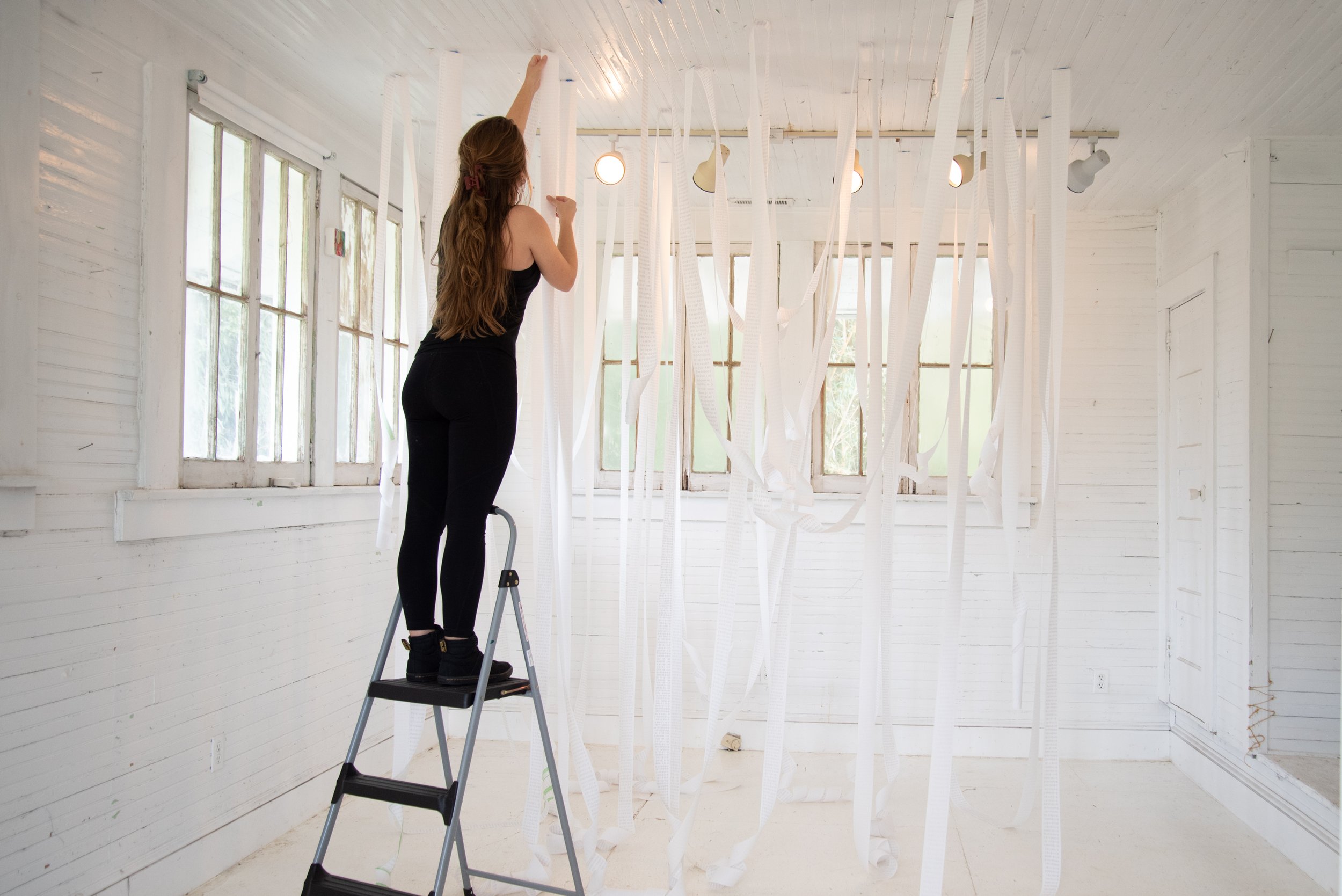
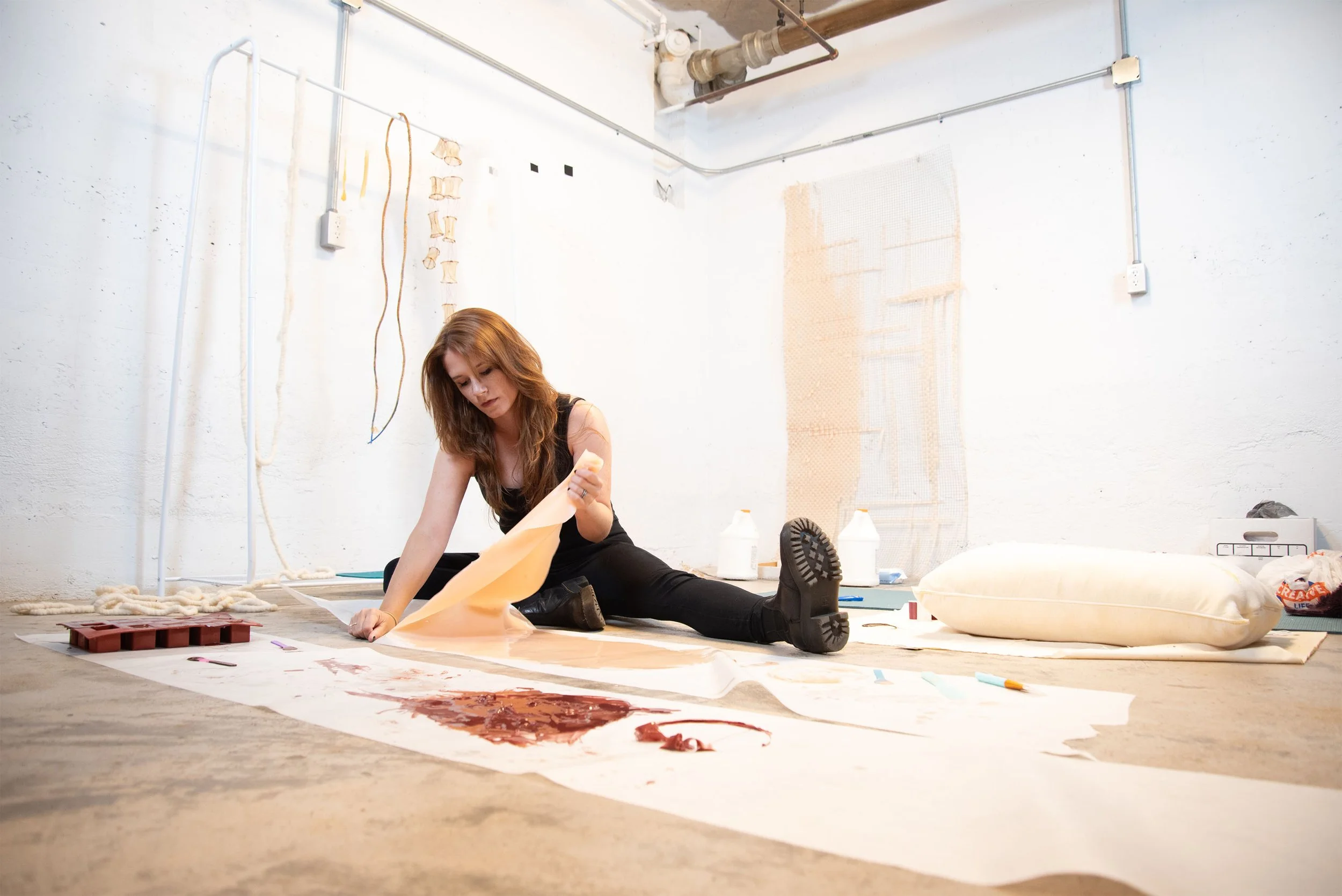
My work is a meditation on the significance of labor and the body in a time increasingly shaped by automation and post-biological ideals. Composed of photographs, sculptures and installation work, these pieces represent an extension of my own body, detached from myself. By deconstructing and reassembling my own form, the work poses questions about autonomy, identity, replication and the significance of the body in the digital age. Through repetitive processes and actions, I think of my labor in creating this work as a form of reclamation over the body and an act of resistance against how information technology shapes identity. While the work is not directly performative, I consider the labor embedded in the making of these works as a kind of quiet performance.
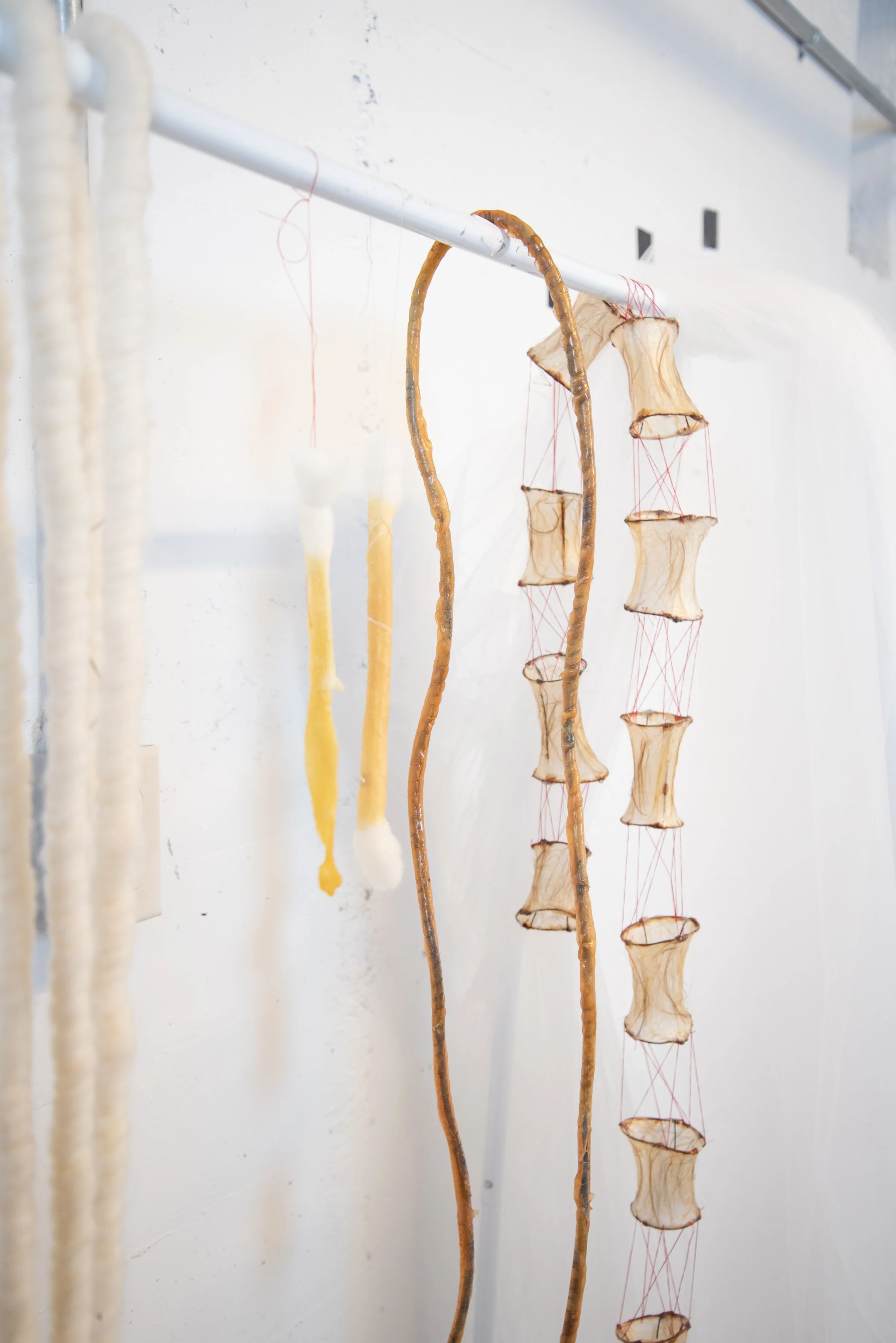
Constructing the work involves the use of remnants from myself and others, in addition to materials that reference the body, such as silicone, to create forms that feel both familiar and estranged. The interplay between organic and synthetic forms function as a metaphor for the increasingly blurred boundary between humans and machines. By utilizing various methods of self-extension, fragmentation, and recontextualization, the meditative process of composing these forms becomes a method of self-reflection and an act of reclamation over the body and self as a human.